
Program Notes
We meet on lutruwita (Tasmania) Aboriginal land.
It is with deep respect we acknowledge the traditional owners of this land, the muwinina people, who belong to the oldest continuing culture in the world.
They cared for and protected Country for tens of thousands of years.
We acknowledge that it is a privilege to stand on Country and walk in the footsteps of those before us. We pay our respects to elders, past and present, to the many Aboriginal people who did not make elder status and to the Tasmanian Aboriginal community that continues to care for Country. We stand for a future that profoundly respects Aboriginal perspectives, culture, languages and history.
This land was never ceded.
Dear guests, welcome to our concert! Below you will find more detailed information about the program, our soloist, our conductors, and the ensembles performing in today’s concert. You can also see upcoming performances from both Hobart and Derwent Valley.
Additionally, we would like to thank the Hobart City Council for their support through their Creative Hobart grant program.
The Hobart City and Derwent Valley bands would also like to thank Laura Paul for her outstanding poster design.
The Program
La Procession du Rocio (1913)
Joaquín Turina (1882 – 1949) arr. Alfred Reed
Derwent Valley Concert Band, conducted by Lyall McDermott
La Procession du Rocio is a depiction of one of the most famous religious/cultural pilgrimages that occur in many parts of Spain every year. The pilgrimage has many starting points but all paths lead to the Andalusian village of El Rocio. Hundreds of thousands of people each year join the pilgrimage which is both a deeply religious event and a joyous, vibrant folkloric festival honouring the Virgin Mary.
Composer Joaquin Turina (1882-1949) was born in Seville, Spain. After studying there and in Madrid, he moved to Paris to study with Vincent d’Indy and although he absorbed elements of the French Style, he was influenced by Isaac Albeniz and Manuel de Falla and inspired to write music that was distinctively Spanish. La Procession du
Rocio became one of his best-known works and is considered to be the first piece to bring him international recognition.
Alfred Reed’s marvellous transcription created in 1962 remains an enduring staple in the repertoire for wind bands.
Short Ride in a Fast Machine, (1986)
John Adams (1947), trans. Lawrence T. Odom
Performed by the Hobart Wind Symphony, conducted by Ryan Conway
Short Ride in a Fast Machine opens with a burst of barely contained exuberance: an insistent woodblock pounding out continuous quarter notes amid a whirling torrent of sound. The second of two fanfares (the other being Tromba Lontan or Distant Trumpet) composed in 1986, Short Ride in a Fast Machine has quickly become one of Adams’ most oft-performed works.
A brilliant example of musical minimalism, the piece draws the audience in with a hypnotic, repetitive rhythm and subtly swerves through a complex series of harmonic shifts and instrumental color variations.
A soaring trumpet fanfare in the midst of the mad rush of energy lends the composition a moment of ecstasy before rejoining the full-throttle race to the end.
Trumpet concerto in A flat for Trumpet, (1950)
Alexander Arutiunian (1920 – 2012) trans. Guy M. Duker
Soloist Yoram Levy
Performed by the Hobart City Wind Symphony, conducted by Simon Reade
Alexander Arutiunian began writing a trumpet concerto for Zolak Vartasarian, but the soloist was killed in military action during World War II before Arutiunian was able to finish the piece. Instead, Russian trumpeter Timofei Dokschitzer performed the premiere in 1950. When Dokschitzer immigrated to the United States, he brought Arutiunian’s concerto with him. It has since gained popularity and is now known as a staple in the trumpet literature. Arutiunian’s compositions are colorful with folk-like melodies. The freely developed and narrative qualities of the 18th century Armenian minstrels, called ashug, are emulated in his music.
Concerto for Trumpet is a single movement that moves through contrasting sections without pause. The brief introduction contains a chromatic melody rich in Armenian folk influences. The first section incorporates two themes, one dance-like and one lyrical, before moving to a romantically-inspired second section. All of the melodies and introductory material are developed at length throughout the work. Finally, a return of the festive opening theme prepares a dazzling solo cadenza and the concerto’s resounding conclusion.
Symphony No. 1, “The Lord of the Rings” (1989)
Johan de Meij (1953)
Performed by the combined Hobart Wind Symphony and Derwent Valley Concert Band, conducted by Simon Reade and Lyall McDermott
De Meij’s first symphony, The Lord of the Rings, is based on the trilogy of the same name by J. R. R. Tolkien that has fascinated and inspired millions of readers since its publication in 1955. De Meij’s symphony consists of five separate movements, each illustrating a personage or an important episode from Tolkien’s masterpiece. The composer offers the following regarding this substantial work in the symphonic band repertoire:
The symphony was written in the period between March 1984 and December 1987, and had its première in Brussels on 15th March 1988, performed by the “Groot Harmonieorkest van de Gidsen” under the baton of Norbert Nozy. In 1989, The Symphony No. 1, The Lord of the Rings, was awarded a first prize in the Sudler International Wind Band Composition Competition in Chicago, and a year later, the symphony was awarded by the Dutch Composers Fund. In 2001, the orchestral version was premiered by the Rotterdam Philharmonic Orchestra and recorded by the London Symphony Orchestra.
The Symphony’s five movements are described as follows:
I. GANDALF (The Wizard)
The first movement is a musical portrait of the wizard Gandalf, one of the principal characters of the trilogy. His wise and noble personality is expressed by a stately motif which is used in a different form in movements IV and V. The sudden opening of the Allegro vivace is indicative of the unpredictability of the grey wizard, followed by a wild ride on his beautiful horse “Shadowfax.”
II. LOTHLÓRIEN (The Elvenwood)
The second movement is an impression of Lothlórien, the elvenwood with its beautiful trees, plants, exotic birds, expressed through woodwind solos. The meeting of the Hobbit Frodo with the Lady Galadriel is embodied in a charming Allegretto; in the Mirror of Galadriel, a silver basin in the wood, Frodo glimpses three visions, the last of which, a large ominous Eye, greatly upsets him.
III. GOLLUM (Sméagol)
The third movement describes the monstrous creature Gollum, a slimy, shy being represented by the soprano saxophone. It mumbles and talks to itself, hisses and lisps, whines and snickers, is alternately pitiful and malicious, is continually fleeing and looking for his cherished treasure, the Ring.
IV. JOURNEY IN THE DARK
The fourth movement describes the laborious journey of the Fellowship of the Ring, headed by the wizard Gandalf, through the dark tunnels of the Mines of Moria. The slow walking cadenza and the fear are clearly audible in the monotonous rhythm of the low brass, piano and percussion. After a wild pursuit by hostile creatures, the Orks, Gandalf is engaged in battle with a horrible monster, the Balrog, and crashes from the subterranean bridge of Khazad-Dûm in a fathomless abyss. To the melancholy tones of a Marcia funèbre, the bewildered Companions trudge on, looking for the only way out of the Mines, the East Gate of Moria.
V. HOBBITS
The fifth movement expresses the carefree and optimistic character of the Hobbits in a happy folk dance; the hymn that follows emanates the determination and noblesse of the hobbit folk. The symphony does not end on an exuberant note, but is concluded peacefully and resigned, in keeping with the symbolic mood of the last chapter “The Grey Havens” in which Frodo and Gandalf sail away in a white ship and disappear slowly beyond the horizon.
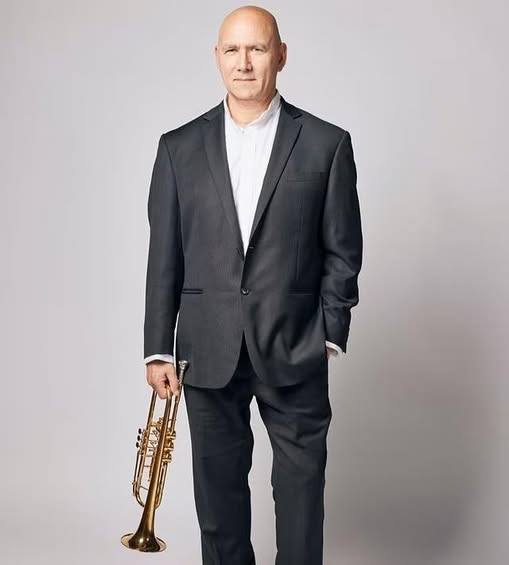
Yoram Levy is one of Australia’s leading trumpeters and brass pedagogues.
He is the Head of Brass and Trumpet at the Australian National of Academy of Music where he teaches trumpet, conducts the brass ensemble, and is involved in curating programs.
Mr. Levy is featured in numerous ABC Classics recordings as the long-standing Principal Trumpet of the Tasmanian Symphony Orchestra, a position he has held till 2023.
Mr Levy has frequently performed with major orchestras in Australia and New Zealand and is in demand nationally and internationally as a recitalist and clinician.
Since his appointment as Senior Lecturer at the Queensland Conservatorium in 1990, Mr. Levy’s dedication to music education has contributed to the development of many exceptional brass instrumentalists and teachers.
Born in Launceston, Tasmania in 1977, Simon Reade is a conductor, composer, educator and trumpet player. Simon is passionate about the performance of new music and has given the world premiere of over 100 new works by Tasmanian composers, many of these with the Hobart Wind Symphony, which he has directed for over 25 years. Simon also directs both the Hedberg and Wind Ensembles for the University of Tasmania, conducts Tasmania’s only A grade Brass Band, Glenorchy City Brass, as well as working freelance with professional and community organisations, including the Tasmanian Symphony Orchestra. He is a fully represented composer at the Australian Music Centre and in 2022 was awarded the APRA/AMCOS State Luminary Award for Tasmania, for his sustained contribution as a conductor and the promotion of Australian Music.
Simon is a sought-after and well-respected conductor. He has been Musical Director of Hobart City Band Inc. since 1997 and as conductor of Hobart Wind Symphony won the 2009, 2010, 2013 and 2017 National ‘A’ Grade Concert Band titles. He took up the position of conductor with the University of Tasmania’s Orchestra and Wind Ensemble in 2020 and was instrumental in the formation of the Hedberg Ensemble in 2022. He is the music director of Glenorchy City Brass, has had a long association with Tasmanian Youth Orchestra, Hobart Chamber Orchestra and from 2016-2019 presented new music concerts with Michael Kieran Harvey under the title FORUM. Simon is very committed to the creation of new music and has particularly championed the music of over 25 Tasmanian composers, He has a special affinity with the work of Don Kay and has premiered dozens of Kay’s works including; Symphony 3 (2011), The Bushranger’s Lover (2014), Concerto for Piano and Small Orchestra (2017), Concerto for Trumpet, Winds and Percussion (as soloist/conductor, 2019), Symphony 4 and Conflagration (both 2021). In 2020-21 he worked with the Tasmanian Symphony Orchestra for the Composing Women workshops and in 2023-25 he has conducted for the TSO’s Live Sessions. In May 2024 he conducted Pianist Elyane Laussade with the Hobart Chamber Orchestra in an acclaimed performance of Beethoven’s Emperor Concerto. In November 2024 he conducted the Chorus and Brass of the TSO for the Vigil held for Remembrance Day at the Cenotaph.
2025 has been a successful year for Simon’s conducting: Russian/Swiss Harpist Alexander Boldachev in a performance of Ginastera’s Harp Concerto (January), internationally renown Euphonium soloist, Steven Mead (June), prepared the orchestra for the Verdi Requiem performance at the 20th Anniversary Festival of Voices (July), Welsh Harpist Benjamin Creighton Griffiths in the Australian Premiere of Creighton-Griffiths Concerto for Jazz Harp and Orchestra (August) and the Tasmanian Symphony Orchestra with soloists for the Australian Composer School (October).
He lives in Campania, just out of Hobart, with his wife Claire and sons Owen, Callum and Elliott.
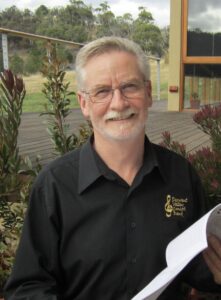
Born in Hobart, Tasmania, Lyall began playing piano and violin from an early age. At the Tasmanian Conservatorium of Music, he studied violin and viola with Jan Sedivka and piano with Beryl Sedivka. He graduated in 1974, having majored in Performance and Education. The following year, Lyall commenced a career with the Tasmanian Department of Education that spanned almost 40 years, working variously as a classroom music teacher, a music consultant, a specialist instrumental music teacher and as a band director.
Active in the local music scene over many years, Lyall has played in cabaret bands, big bands, and rock bands, including the acclaimed ‘Fern Chutney’. For ten years he was a recording engineer at Red Planet Studios, during which time, in collaboration with Stewart Long, he wrote a considerable body of music for the ABC TV Education Unit. Stewart and Lyall also composed soundtracks to several documentary series for American cable television, including the award-winning ‘Frontiers of Flight’, a joint venture by the Discovery Channel and the Smithsonian Institute. Lyall is a published composer of ensemble and concert band pieces, written especially for use in schools.
Lyall joined the Derwent Valley Concert Band as a baritone saxophone player in 1999. He was appointed Assistant Conductor of the Band in 2009 and has been its Chief Conductor since 2010. Lyall was awarded Life Membership of the DVCB in 2015, and appointed Director of Music in 2021.
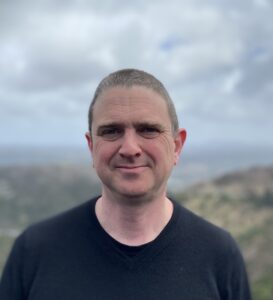
Ryan Conway graduated from the University of Tasmania’s Conservatorium of Music in 2023, completing his Bachelor of Music study as a classical trumpeter, having been taught and led by an array of brass musicians and other classical musicians. Throughout his studies, Ryan has been involved with community bands as a member of the Hobart City Band, having been a member of Hobart Youth Winds, a current member of Hobart Wind Symphony, the principal cornet of Hobart Brass Band, and since 2024 the conductor of the Hobart Junior Band. He is also a member of the Glenorchy City Concert Brass Band and has participated in the Student Music Collective’s Orchestral Programs since its inception.
Currently undergoing study in teaching, Ryan teaches the performance of brass instruments to young players in several schools in the Hobart area and has been a conductor and performer at public performances for the schools’ band programs, aiding in the growth of young musicians in Hobart.
Under the leadership of Robyn Males, conductor of Hobart Brass Band, and through workshops led by Simon Reade, Ryan has grown as a conductor in confidence and skill, using the accrued knowledge of countless conductors, bandmasters, and teachers to develop his style and skill to lead ensembles of all sizes.

The Hobart City Band Inc. is a not-for-profit organisation in Tasmania, Australia. It offers members of the community the opportunity to play in ensembles catering to a range of musical tastes and abilities.
The Hobart City Band Inc. has over 90 members across five ensembles (Hobart Wind Symphony, Hobart Youth Winds, Hobart City Brass Band, Hobart City Junior Brass Band and Hobart Swing Band), including people relatively new to music through to highly experienced, professionally qualified musicians. Ages range from 12 years to over 60, with the majority being under 30.
The Hobart Wind Symphony is a high-level ensemble performing the peak repertoire of wind bands. The ensemble aims to produce high-quality music for contest and concert performance.
The Wind Symphony was the Australian National Open A-Grade Concert Champion in 2009, 2010, 2013, and 2017, as well as placing second at the 2024 championship in Adelaide. The Wind Symphony has been the Tasmanian Open A-Grade Concert Champion since 2007. The Wind Symphony has also been running a composer’s workshop since 2014, giving young composers the chance to have their compositions performed and recorded as a learning experience, and this year have started a conducting workshop, giving conductors an opprotunity to conduct a high level ensemble.
2025 has been a great year for the Hobart Wind Symphony, with a concert featuring Swiss Russian harpist Alexander Boldachev, a collaboration with instrumentalists from Brigham Young University in the USA, a concert and workshop with acclaimed British euphonium soloist Steven Mead, and performing in the 20th anniversary concert of the Festival of Voices, as well as in Verdi’s Requiem. The Wind Symphony has been conducted by Simon Reade since 1997.
The Derwent Valley Concert Band was started in 1993 by local music teacher, the late Layton Hodgetts OAM, to allow talented students to continue playing a musical instrument after finishing grade 10. Not only did ex-students come along and play, but so did their parents, grandparents and friends. As a community band it has always supported, and continues to support various local events in the Derwent Valley, which include Australia Day, ANZAC Day, Christmas Carols and the Christmas Pageant among many others. The band has also travelled on 10 international tours, including a Royal Wedding in Denmark, and has won numerous state, national, and European Championships. The experiences gained by its members have been unprecedented and its history is an example of what can be achieved through music. As the organisation
continued to grow, new ensembles were formed to cater for (new) players of various levels of skill and musical experience. These include three concert
bands, a marching band and various small ensembles. Please visit our website https://dvcb.org/ if you would like any further information about our organisation or wish to join a band.

Upcoming concerts from the Hobart City and Derwent Valley Bands
Derwent Valley Band:
- Hobart Christmas Pageant, 22nd November 2025
- Carols in the Park, Friday 12th December 2025 (featuring soloists Grace Oven and Rebecca Oliver-Black)
- New Norfolk Christmas Parade, 13th December 2025
- Hobart Christmas Pageant, 22nd November 2025
- End of Year Concert, 25th November 2025
- Conducting Workshop, 29th November/4th December 2025